About Piil
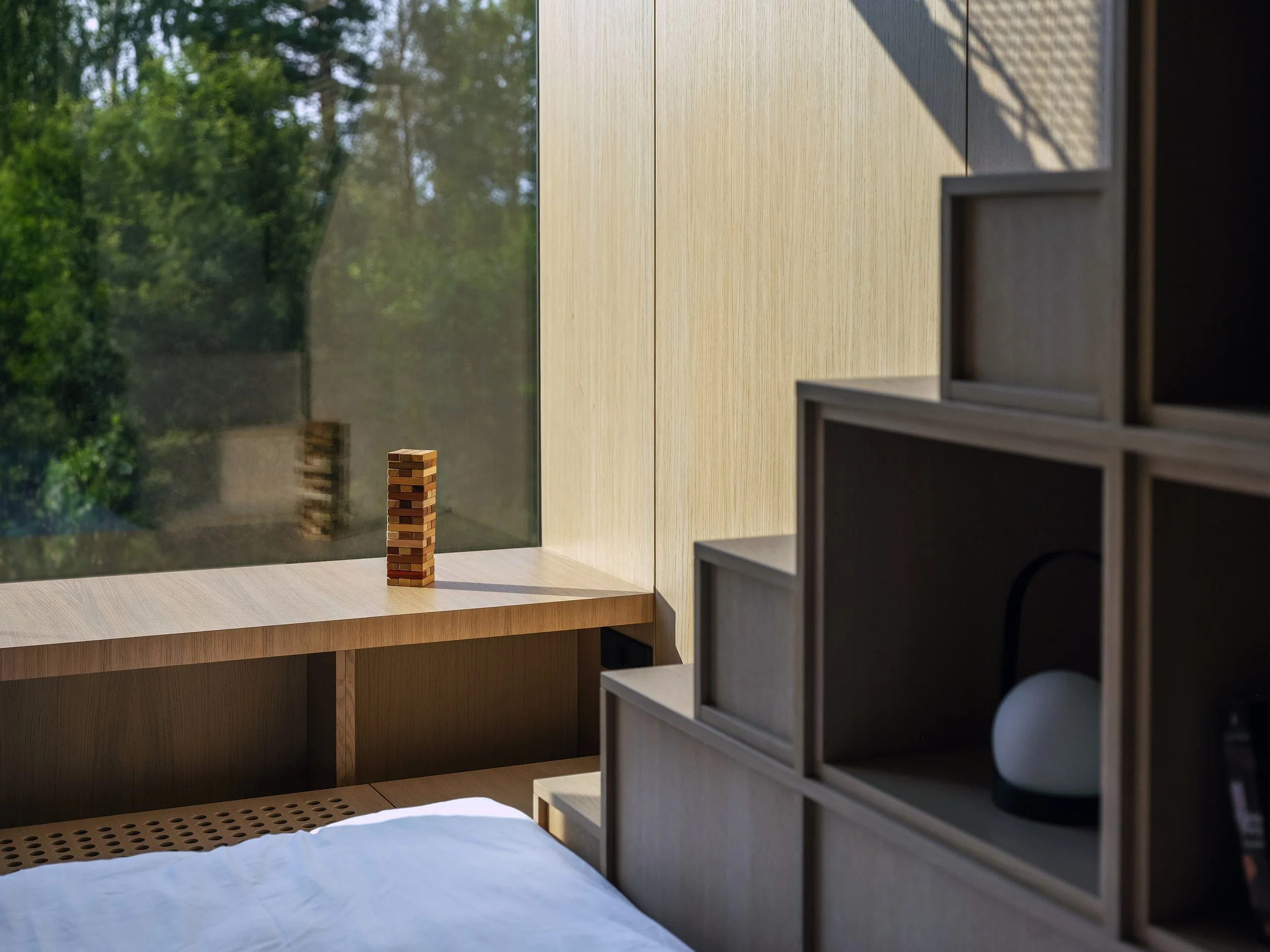
Piil ® began as an idea for a contemporary treehouse — raised among the trees, light in footprint, generous in its views, comfortable to inhabit, and refined in its design.
Images of the first prototype, set in an Estonian forest, quickly drew interest from around the world, with enquiries about placing Piil retreats in many different landscapes.
Following two years of use, feedback, and further refinement, Piil is now available worldwide — allowing more people to experience a retreat into nature that is taken, quite literally, to new heights.
That’s the story in brief. Further details are shared below.
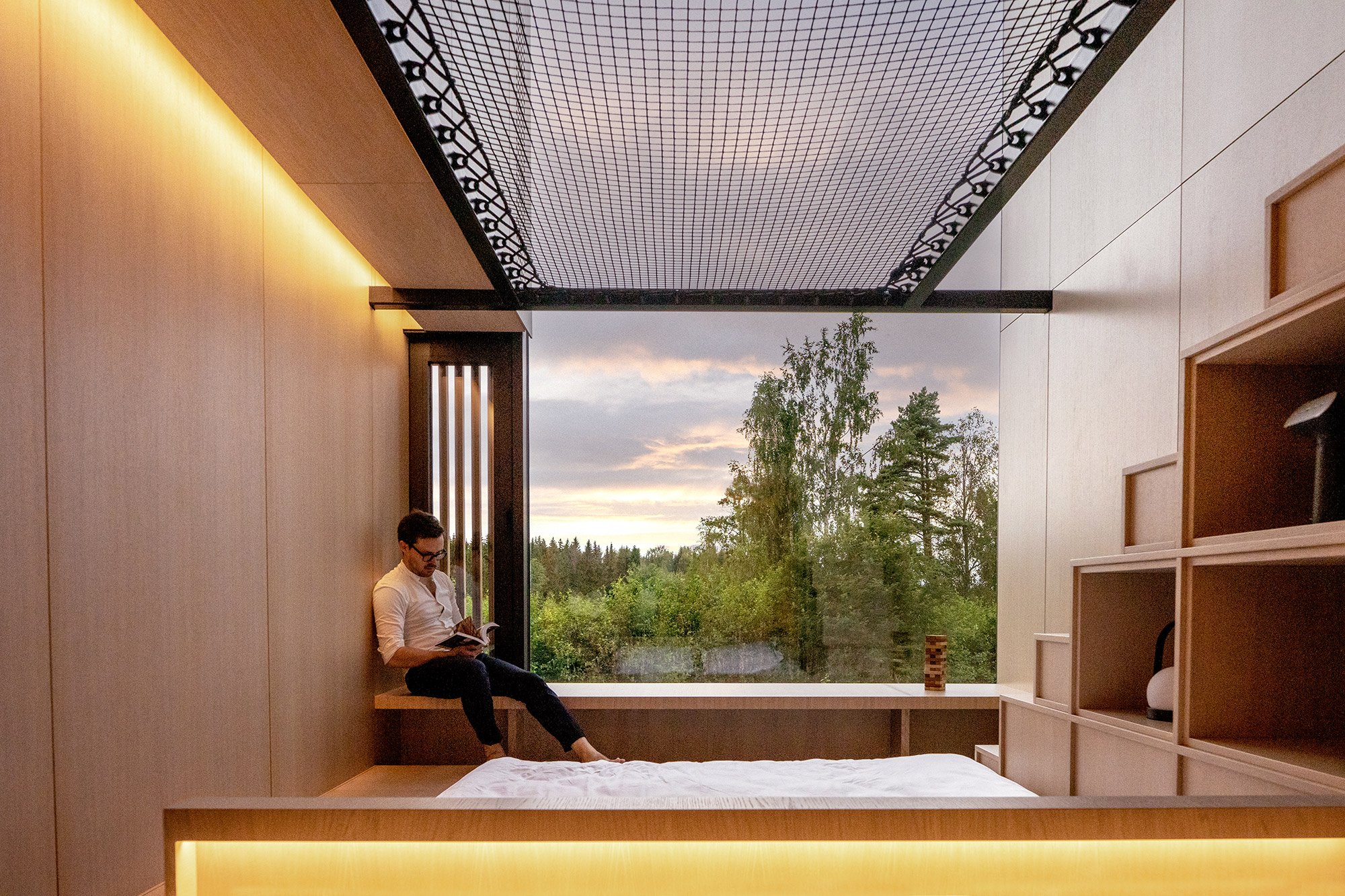
Arseni, designer of Piil, in the prototype. Photo © by Yifan Liu.
Prototype to Piil 2.0
Piil began as an exploration by the studio Arsenit into what a contemporary treehouse could be — raised among the trees, light in footprint, generous in its views, comfortable to inhabit, and refined in its design — without physically attaching to or harming the surrounding trees.
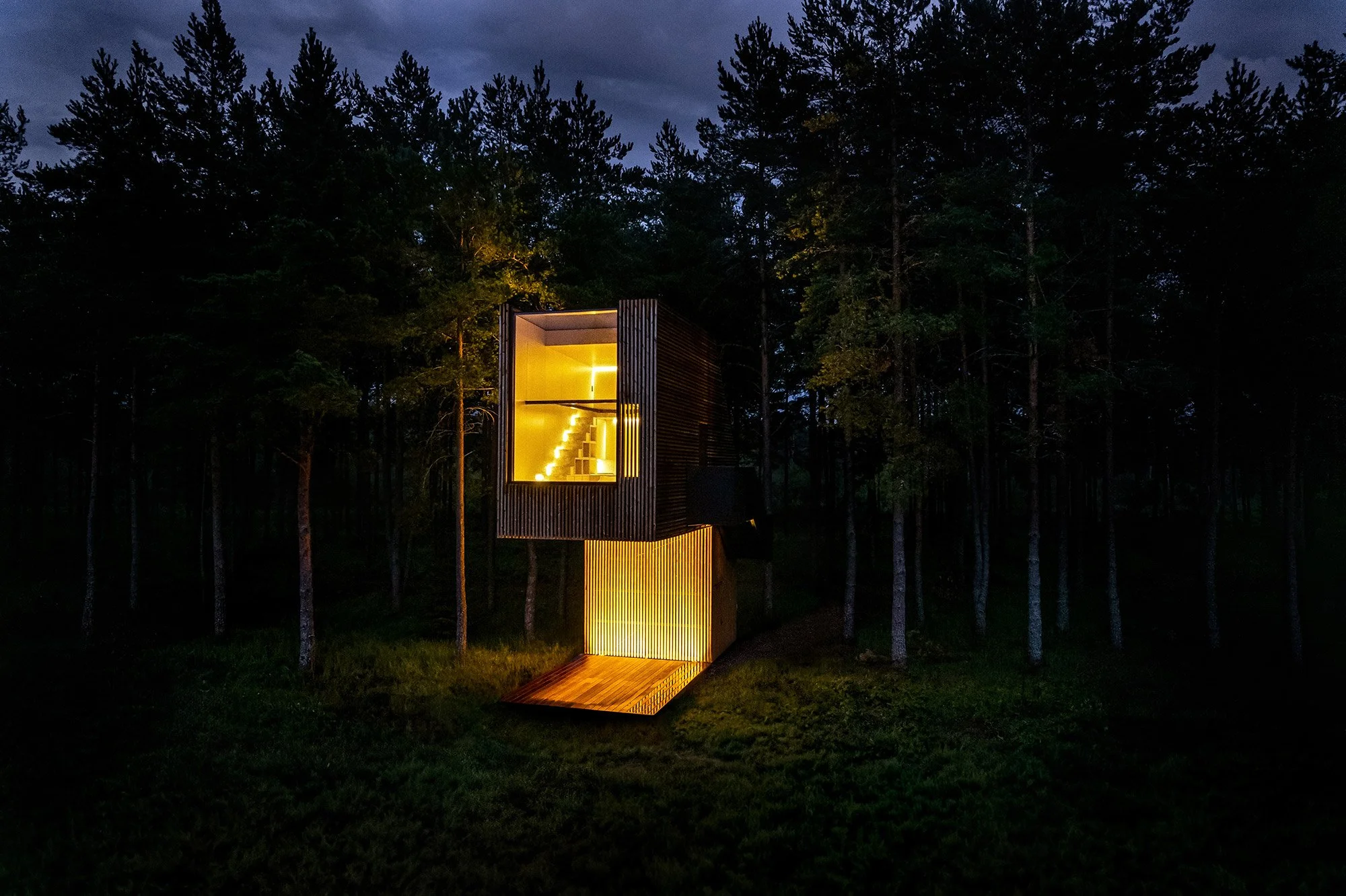
The first Piil was realised as a full-scale prototype in an Estonian forest. Conceived as a year-round retreat, it was designed to frame changing light and shifting seasons, offering an elevated perspective among the tree branches. From the outset, it was intended to be lived in rather than simply exhibited, allowing the architecture to be tested through daily use, seasonal change, and direct experience.
Images of the prototype quickly attracted international interest, with enquiries about whether Piil could be realised in other landscapes and contexts. This original Piil — now referred to as Piil 1.0 — remains available as a bespoke option, for locations where this design unlocks the best experience.
At the same time, insights gained through use and feedback informed the development of Piil 2.0: an evolved version that retains the character and spatial intent of the original, while being optimised for durability, repeatability, cost, and international delivery.
Piil is produced by the Estonian manufacturing partner Repston, allowing the retreat to be shipped and assembled worldwide with a high level of consistency and precision. Together, the two versions represent a shared architectural idea, available for different contexts and modes of delivery.
Production & delivery
Piil is produced using a prefabricated approach, with the majority of construction completed off-site under controlled conditions. This ensures a high level of consistency, precision, and quality across all units.
Production is organised by the Estonian manufacturing partner Repston, whose worldwide experience allows Piil to be prepared for international shipping and efficient on-site assembly. The retreat is delivered as a series of prefabricated elements that are connected on site with minimal disruption.
This approach reduces construction time, limits impact on sensitive locations, and makes Piil suitable for a wide range of settings — from remote natural sites to more accessible plots.
Exact delivery methods, installation logistics, and timelines vary depending on location and site conditions, and are discussed individually once a project progresses beyond initial enquiry.
Availability & process
Piil is produced in limited numbers, with each project considered individually.
Both Piil 1.0 and Piil 2.0 are available to order, with the appropriate version and configuration depending on site conditions, location, and intended use.
While the core architectural idea remains consistent, Piil allows for a degree of customisation. Options and upgrades — including variations between Piil 1.0 and Piil 2.0 — are outlined in the Design Guide, alongside information on finishes, configurations, and practical considerations.
Enquiries typically begin with a review of the Design Guide, followed by a discussion to understand site context, requirements, and feasibility. From there, production, delivery, and installation are explored in more detail on a case-by-case basis. The Design Guide provides a detailed overview of available options and the process from enquiry to delivery.
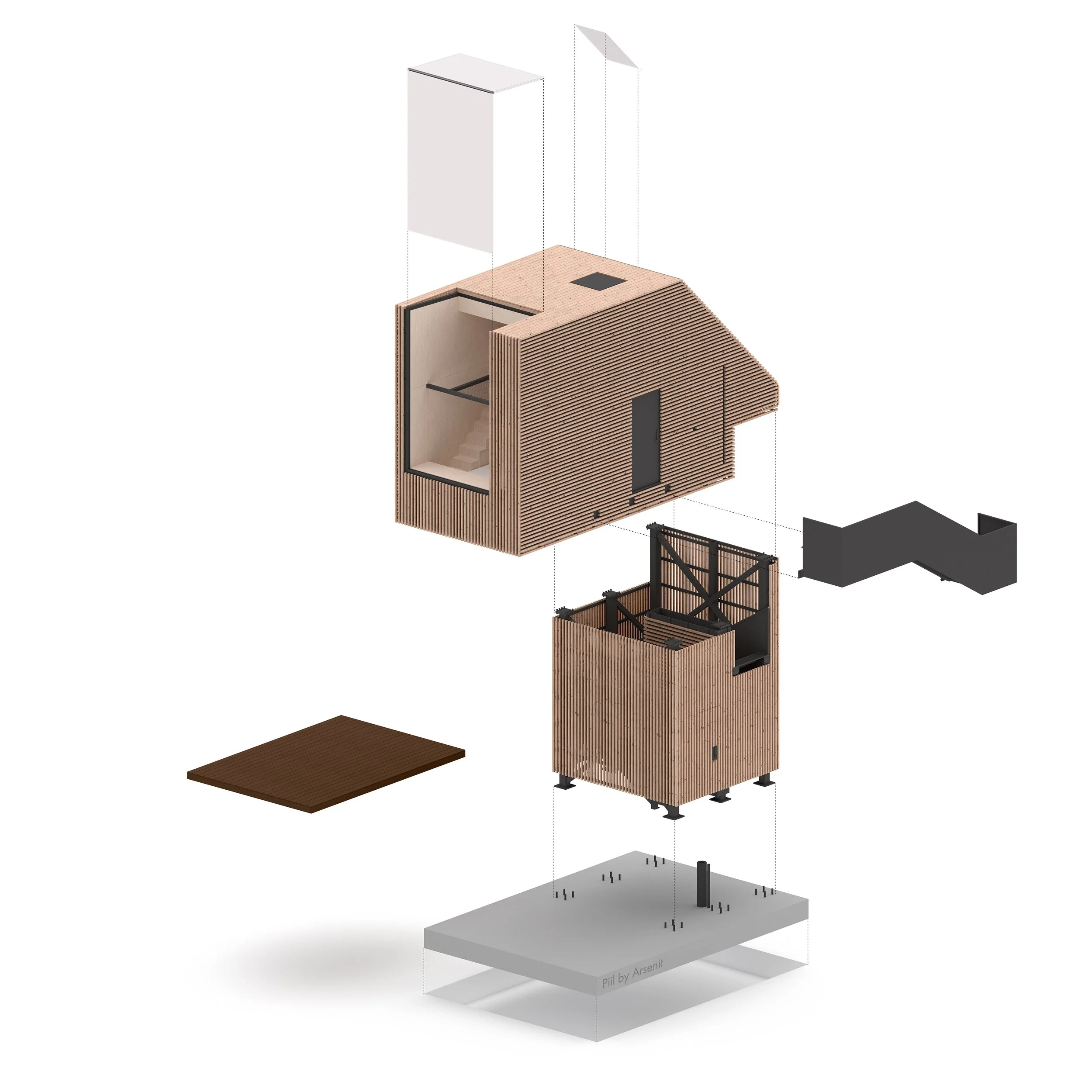
Piil prototype (version 1.0) diagrammatic assembly
Frequently asked questions
-
Piil is a design-led, fully finished retreat rather than a basic shell. Pricing therefore reflects the level of architectural resolution, integrated systems, and built-in furniture included as standard.
Indicative pricing and configuration options are outlined in the Design Guide. Final costs depend on version (Piil 1.0 or Piil 2.0), selected options and optional upgrades.
-
Piil is delivered as a complete architectural unit, including the primary structure, envelope, integrated joinery, bathroom, kitchenette, and climate systems.
Items such as foundations, site preparation, utility connections, transport, and local taxes are typically excluded and vary by location. These are discussed clearly during the enquiry process.
-
Piil is intentionally compact in its enclosed internal area, while offering a much larger spatial experience overall.
The net internal floor area is approximately 19 m², measured in line with standard area conventions. In addition to this, Piil includes a hammock mezzanine, stair ‘balcony’, integrated storage areas, enclosed heat pump store, and a ground-level terrace. When these elements are considered together, the total usable and experiential area is approximately 51 m².
The mezzanine level is designed as a place to pause and inhabit rather than as a full standing room. Due to its height — typically just over 1.5 m — it is not counted as internal floor area, even though it plays an important role in how the space is used and experienced.
With an overall height of approximately 8.75 m, Piil extends vertically rather than horizontally. This allows the retreat to feel generous and layered, while maintaining a relatively small footprint on site and minimising ground impact.
As a result, Piil sits outside conventional “tiny house” classifications: compact where it needs to be, but spatially rich in how it is experienced.
Indicative dimensions for planning are shown in the Design Guide.
-
Yes, within a defined framework.
Material finishes, internal configurations, and certain features can be adjusted, depending on version and context. Available options and upgrades are outlined in the Design Guide to ensure clarity and consistency.Further customisation and bespoke configurations, including WIP options shown on the website, may be available on request subject to Team availability.
-
Piil can be placed in a wide range of settings, including forested, rural, and remote locations. Final suitability depends on access, ground conditions, local regulations, and services availability.
Each site is considered individually as part of the enquiry process.
-
Yes — it is possible to provide early feasibility input before land is acquired. This can include high-level assessments of site capacity, potential arrangement of one or more Piil units, and preliminary ideas for shared facilities or infrastructure.
This type of work focuses on spatial and design feasibility rather than planning advice. Planning and permitting requirements vary significantly by location and must be confirmed locally by the client or their appointed consultants.
Because feasibility studies require a dedicated time investment and project-specific input, this service can be provided separately, with an associated feasibility fee. You’re welcome to get in touch to discuss specifics.
-
The main requirements are outlined in the Design Guide. In general, this includes securing any necessary planning or permits, preparing appropriate foundations designed by a local specialist, and ensuring that key services such as water, drainage, and electricity are available on site.
Specific requirements vary by location and site conditions, so local consultants should always be engaged. The Design Guide provides further guidance on typical approaches and responsibilities.
-
Foundation design depends on soil conditions, site constraints, and local engineering requirements.
Typical solutions include slab or piled foundations, designed by a local structural engineer. High-level guidance is provided in the Design Guide, with detailed coordination organised by Repston once site preparation is being arranged.
-
Planning and permitting requirements vary by country and locality.
In most cases, approval will be required — please seek local expert advice.Piil Team can provide the technical drawings and specification information to help you or your appointed local experts submit the application, as described in the Design Guide. The final responsibility for obtaining permissions typically rests with the client.
In order to reduce risk, planning applications are typically submitted, and permission received, before the final order is placed. This is described in further detail in the Design Guide.
-
Timelines vary depending on whether planning permission is required, on Piil version and level of customisation, site location, production scheduling, and site readiness.
Indicative timelines are discussed after initial enquiry and refined once project specifics are known.
-
Yes. Piil 2.0 has been developed specifically for international delivery and installation and can be shipped worldwide, subject to local regulations and logistics.
-
Yes. Piil can be used as private accommodation or as part of a hospitality offering, subject to local regulations.
Its directional design allows multiple units to be placed side-by-side while maintaining privacy and experience quality.
-
Piil is suited to individuals, creatives, and hospitality operators seeking a refined, compact retreat with a strong architectural identity.
-
Piil is an architect-led project developed by the studio Arsenit, which holds authorship of the design and the Piil trademark.
Manufacture of Piil is carried out by Repston under licence. Repston is responsible for production, technical compliance, construction, delivery, and coordination of Piil and any selected options or upgrades.
During early enquiries, communication may involve both Arsenit and Repston. Once a Personalised Quote is agreed and production begins, Repston typically becomes the primary point of contact for delivery and manufacture-related matters.
If your question is not addressed above, of if you’d like more detailed information, including available configurations and practical considerations, get in touch with the Team and request your Design Guide.